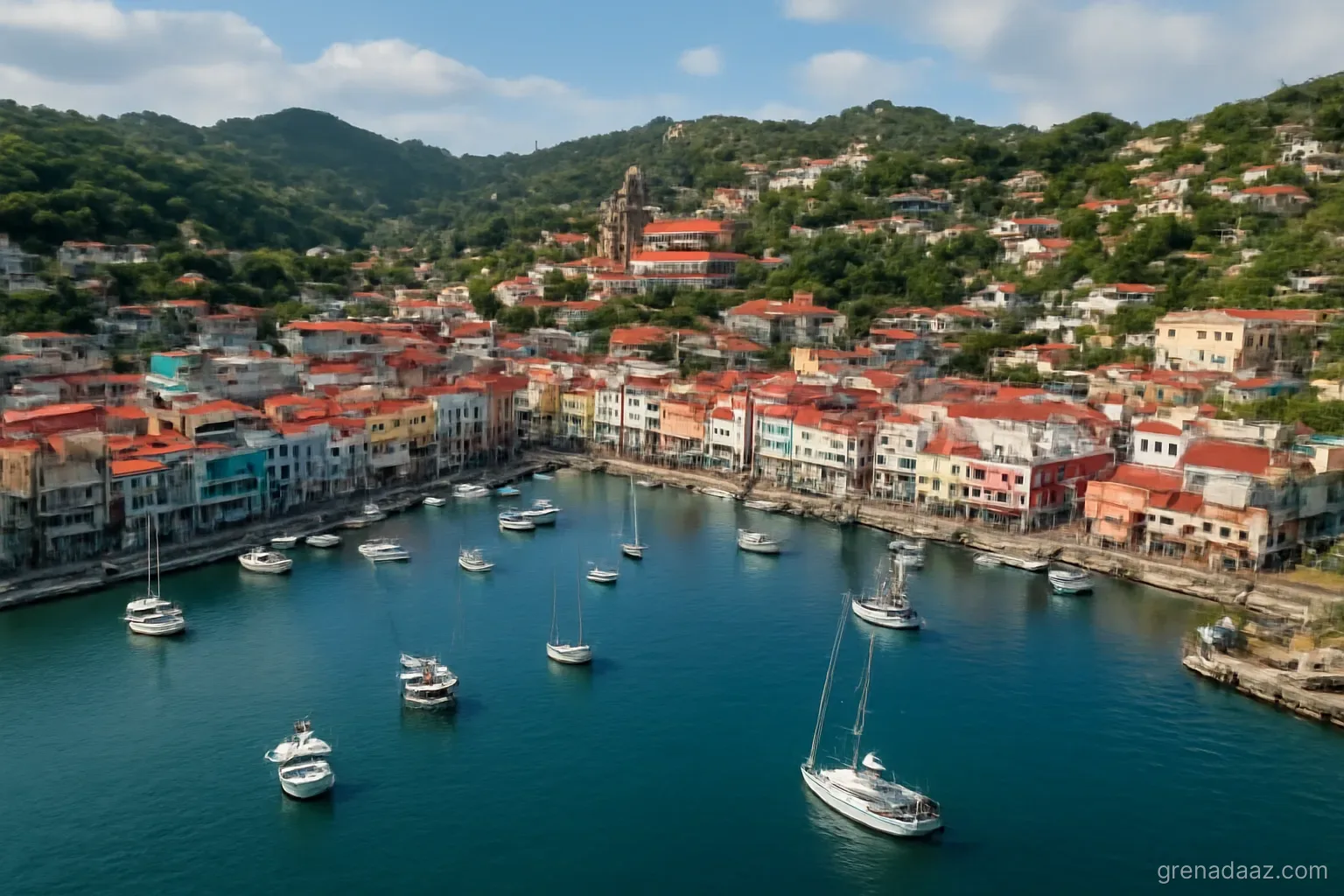
Modern Grenada was shaped by four episodes: colonisation and plantation agriculture, independence, a revolution that ended in violence and foreign intervention, and a hurricane that forced the country to rebuild from almost nothing.
Colonial foundations
Control passed between European powers before settling with Britain, and the plantation economy that developed relied on enslaved African labour. That history explains both the island's demography and its institutions — the legal system, the parliamentary structure and the language all descend from the British period.
Nutmeg arrived in the nineteenth century and gradually replaced sugar as the defining crop, creating the smallholder agricultural pattern still visible today.
Independence
Grenada became independent in 1974, retaining the monarch as head of state. Independence arrived amid considerable domestic political tension, and the new state's early years were unsettled.
Revolution and intervention
In 1979 a political movement took power outside the constitutional process and governed for four years, pursuing a socialist programme and aligning internationally with Cuba and the Eastern bloc. The period ended in 1983 with a violent internal split, the killing of the prime minister, and a military intervention led by the United States alongside Caribbean partners.
Constitutional government was restored, and Grenada has held regular elections since. The episode remains a defining reference point in national memory, and its physical traces — including the incomplete airport project of the era, which later became the country's main airport — are still visible.
Hurricane Ivan and what it changed
In 2004, Hurricane Ivan struck the island directly. The damage was catastrophic: the great majority of buildings were damaged or destroyed, and the nutmeg industry — dependent on mature trees that take years to bear — was devastated.
Three lasting consequences:
- The economy diversified out of necessity, leaning harder on tourism, education services and later citizenship revenue
- Building standards and insurance practice changed
- The assumption of relative hurricane safety was permanently revised
The modern shape
What emerged is a small, service-oriented economy with four supports: tourism, a large offshore university, agriculture, and revenue from the citizenship-by-investment programme relaunched in 2013.
The last of these is genuinely significant for a country this size — it funds infrastructure and development spending that domestic revenue alone could not.
Frequently asked questions
What happened in 1979 and 1983?
A movement took power outside the constitutional process in 1979; in 1983 an internal split and the killing of the prime minister were followed by a US-led intervention and the restoration of constitutional government.
How significant was Hurricane Ivan?
Extremely — the great majority of buildings were damaged and the nutmeg industry, dependent on mature trees, was devastated.
How did the economy change afterwards?
It leaned harder on tourism, education services and later citizenship revenue, diversifying away from agricultural dependence.
What did independence retain from the colonial period?
The monarch as head of state, a parliamentary structure, English common law and the English language.
Need a tailored roadmap?
Viking Global Group walks with you from paperwork to settlement. Call +849.219.219.88 or email [email protected] for a free consultation.
Related articles
Frequently Asked Questions
How does this relate to the Grenada guide?
The article links the Grenada guide to overview.
Information is for reference and may change under the latest official policy. Please contact us for current regulations.